Comprehensive HVAC Maintenance Checklist: The Homeowner’s Guide to Smart Tune‑Ups
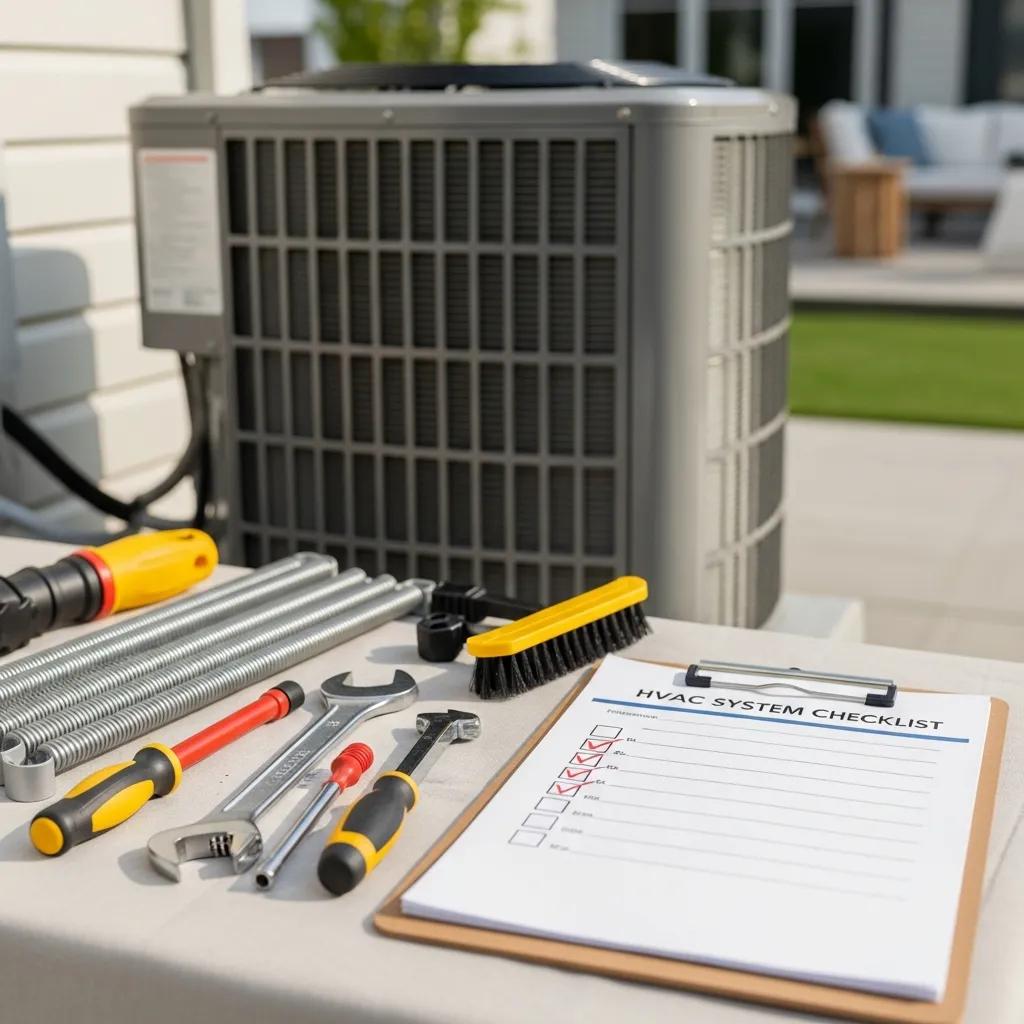
This HVAC maintenance checklist breaks down the routine inspections, cleaning steps, and performance checks that keep your heating, ventilation, and air conditioning system safe, efficient, and dependable. You’ll learn what a homeowner checklist should cover, how preventative maintenance cuts energy use and repair bills, and when it’s time to call a professional. When systems are neglected, homeowners often see higher utility bills, uneven comfort, and surprise breakdowns—this guide gives practical, seasonally tuned actions you can take and clearly marks which items need licensed technicians and special tools. Inside you’ll find the reasoning behind regular tune‑ups, a pro inspection checklist, step‑by‑step seasonal tasks, DIY vs. professional guidance, and scheduling tips geared to Southern California conditions.
Why Is a Regular HVAC Maintenance Checklist Crucial for Homeowners?
A regular HVAC maintenance checklist is a proactive plan of inspections and tune‑ups that preserves performance, safety, and efficiency by catching wear, leaks, and blockages early. Routine service restores proper airflow, verifies refrigerant charge and controls, and removes contaminants that strain components. The payoff is lower operating costs, fewer emergency repairs, and steadier indoor comfort. Left unchecked, systems lose efficiency, drive up utility bills, and face a higher risk of part failure—so a checklist turns vague intentions into scheduled, repeatable actions that protect your home. The short list below highlights why a homeowner checklist belongs on every seasonal to‑do list.
Research consistently shows measurable energy savings when faults are detected and systems are optimized.
Here are the immediate homeowner benefits of a regular tune‑up.
- Lower energy bills through improved equipment efficiency and correct refrigerant and airflow settings: Routine maintenance keeps your system running at peak performance, cutting energy use and monthly costs. Proper refrigerant levels and clear airflow stop the system from overworking.
- Fewer emergency repairs because early wear and leaks are caught before they fail: Addressing small issues early prevents costly breakdowns and reduces long‑term repair frequency.
- Better indoor air quality as filters, coils, and drains are cleaned and contaminants removed: Regular cleaning limits dust, allergens, and microbial growth for a healthier home.
- Longer equipment life since lubrication, tightening, and calibration reduce stress on parts: Consistent upkeep lowers wear and keeps systems running reliably for more years.
Those gains show how small, scheduled actions translate into real performance and cost improvements—and point to the areas homeowners should prioritize on the checklist.
What Are the Key Benefits of Following an HVAC Tune‑Up Checklist?
Using a structured tune‑up checklist delivers clear improvements in comfort, cost, and safety by targeting the parts most likely to fail. A well‑tuned system runs closer to manufacturer specs, reducing runtime and energy use while holding temperatures more steadily—this stability improves comfort and lowers your utility bills. Regular cleaning and filter changes cut airborne particulates and biological growth, helping allergy sufferers and improving indoor air quality. Preventive inspections also catch failing parts—worn belts, loose electrical connections, or minor refrigerant leaks—so you can fix them before they force a costly compressor replacement or unexpected downtime.
Homeowners who stick to routine maintenance typically see steadier bills and fewer emergency service calls. Next, we’ll cover what technicians actually do when a system needs professional attention.
How Does Regular HVAC Service Prevent Costly Repairs?
Regular HVAC service prevents major repairs by finding early faults, correcting inefficient conditions, and replacing inexpensive wear items before they cause bigger failures. For example, a dirty evaporator coil reduces heat transfer and makes the compressor work harder, which speeds wear and can eventually require a full compressor rebuild or replacement; timely cleaning stops that cascade. Clogged condensate drains can let water reach pans and electronics, causing corrosion or control failure—clearing and insulating drains prevents this chain reaction. Tightening electrical connections and testing safety controls also stops intermittent faults that can damage motors or controls.
Understanding these failure chains shows how a modest, regular investment in inspection and small repairs often avoids large capital replacement costs down the road, and it clarifies when trained technicians and diagnostic tools are needed.
What Does a Professional HVAC Inspection Checklist Include?
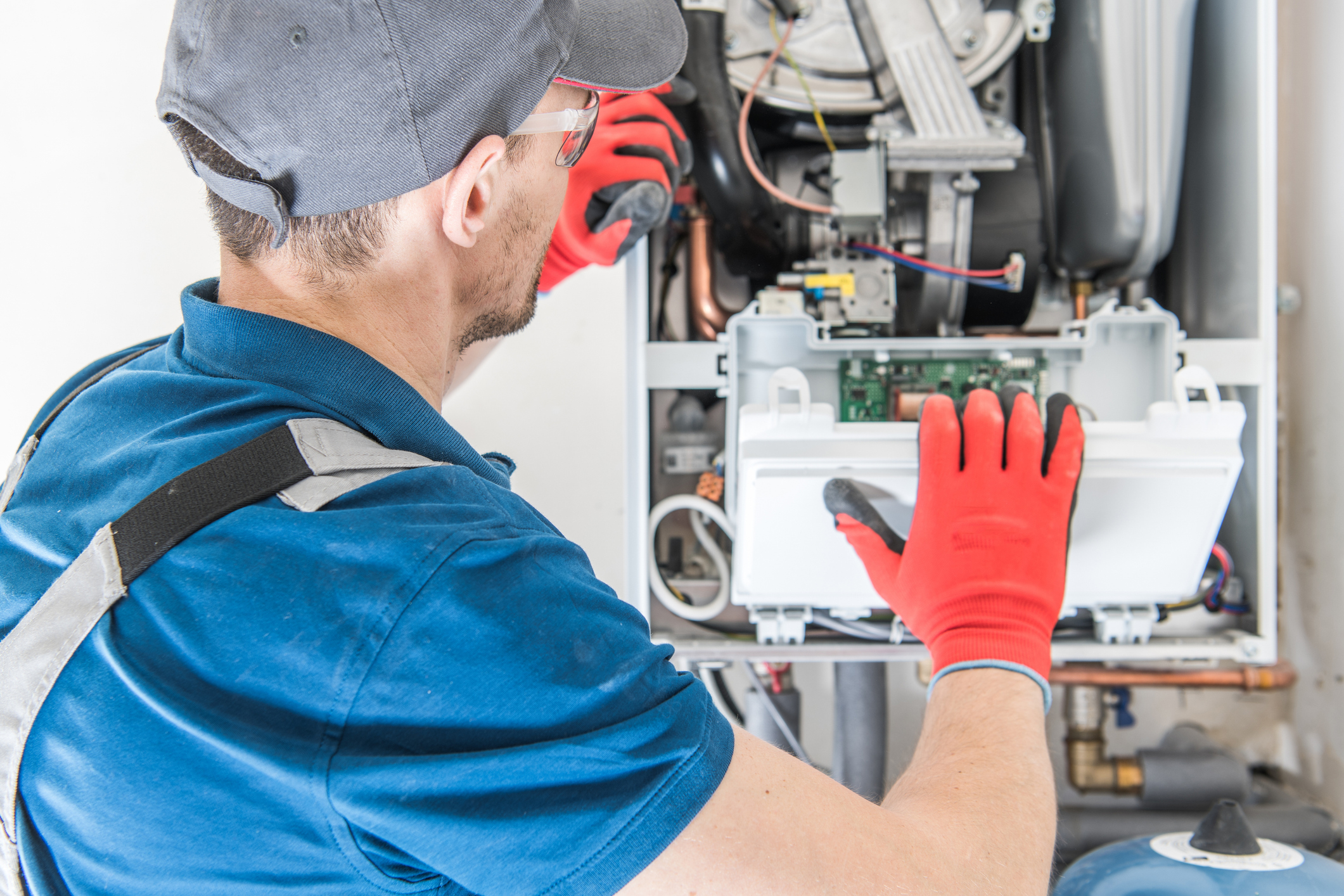
A professional inspection is a methodical, multi‑point review by trained technicians covering airflow, refrigeration system health, electrical safety, combustion and carbon monoxide risks (for combustion appliances), and controls. Technicians use calibrated instruments to measure refrigerant pressures, system amperage, and temperature differentials while visually and mechanically checking components that homeowners shouldn’t test themselves. A pro inspection also documents condition for warranties, finds subtle leaks or failing bearings, and provides clear corrective recommendations to complement routine homeowner care.
Below is a compact table listing major components, common issues pros find, and the typical technician actions that restore safety and performance.
| Component | Common Issue Found | Technician Action |
|---|---|---|
| Air filter / return grille | Restricted airflow and dust buildup | Replace or recommend a MERV‑rated filter and clean grilles to restore airflow |
| Condenser coil (outdoor) | Dirt, debris, or bent fins reducing heat exchange | Clean the coil, straighten fins, and verify fan operation |
| Evaporator coil (indoor) | Frosting, dirty surfaces, reduced cooling | Check airflow, clean the coil, and assess refrigerant levels |
| Blower motor & wheel | Worn bearings, imbalanced wheel, motor overheating | Lubricate bearings, balance the wheel, and test motor amperage and airflow |
| Refrigerant circuits | Low charge or leaks causing efficiency loss | Perform leak detection, recover/recharge to spec, and repair leaks |
| Electrical & controls | Loose connections, failing relays, unsafe wiring | Tighten connections, test capacitors/relays, and verify thermostat communication |
| Condensate drain | Blockage and overflow risk | Clear and treat the drain, and add safety switches if required |
| Combustion safety (furnace) | Incomplete combustion or CO risk | Test combustion and CO levels, and inspect venting for safety |
This table shows how pro actions map directly to homeowner benefits—restored efficiency, fewer failures, and improved safety—enabled by tools and calibration beyond typical DIY checks.
Which HVAC Components Are Checked During a Professional Tune‑Up?
During a professional tune‑up, technicians inspect filters, airflow paths, indoor and outdoor coils, the blower assembly, refrigerant charge, electrical systems, thermostat calibration, and condensate drainage to ensure every part supports safe, efficient operation. The blower and motor are checked for RPM and current draw because those determine consistent airflow and system cycling; fixing imbalances or worn bearings improves comfort and prevents motor burnout. Refrigerant lines and compressor operation are measured with gauges to confirm correct charge and detect leaks that reduce cooling capacity. Electrical systems are tested for voltage and loose connections to avoid arcing or premature component failure, and thermostat calibration is verified to prevent short‑cycling or underperformance.
How Does Professional Maintenance Enhance Energy Efficiency and Indoor Air Quality?
Professional maintenance improves energy efficiency and indoor air quality by restoring heat‑transfer surfaces, ensuring correct airflow, and addressing contaminant sources that lower system performance. Cleaning condenser and evaporator coils recovers lost heat‑exchange capacity, cutting run time and electrical demand. Balancing blower performance and sealing duct leaks prevents conditioned air loss so rooms reach set temperatures with less runtime. For IAQ, technicians remove mold‑prone debris, sanitize drain pans, and recommend filtration upgrades when appropriate—steps that reduce particulates and microbial load in circulated air. Industry findings show that well‑maintained systems can run several percentage points more efficiently and noticeably lower indoor particulate counts, which means better health and lower operating costs.
These benefits show why combining thorough professional service with homeowner upkeep delivers lasting efficiency and air‑quality gains.
How Can Homeowners Perform Seasonal HVAC Maintenance Effectively?
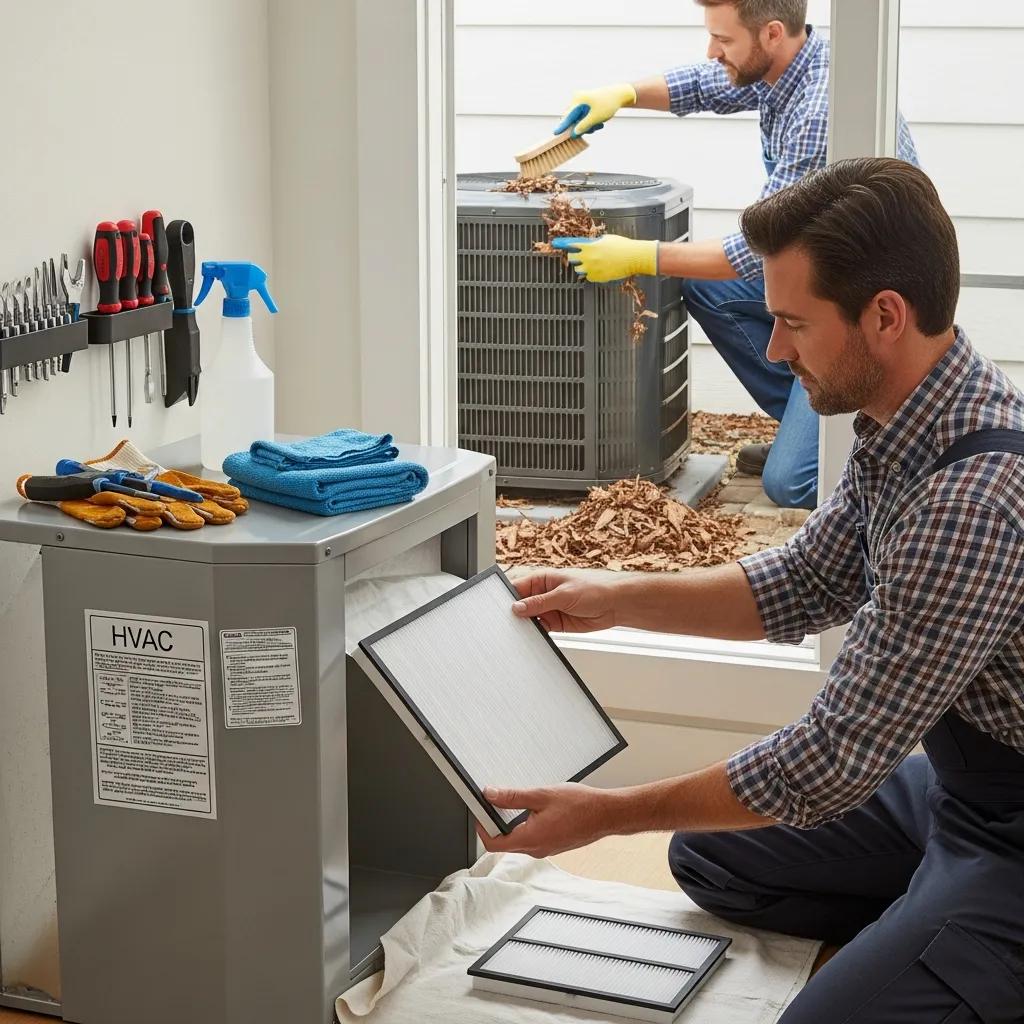
Homeowners can safely handle several high‑impact seasonal tasks that preserve airflow, filtration, and outdoor unit performance while leaving refrigerant and electrical work to qualified technicians. Seasonal maintenance usually follows a simple pattern: prepare the outdoor unit for summer by clearing debris and shade where needed, and get combustion systems ready for winter by checking venting and filter condition. A clear DIY vs. Professional guide helps you decide what’s safe to do and what requires tools, training, or permits. Starting with the basics saves energy and prevents common failures—knowing when to call a pro avoids risky work on pressurized refrigerant circuits or live electrical panels.
Use the table below to match seasonal chores with DIY suitability and understand why each task matters.
| Task | DIY? (Yes/No) | Why It Matters |
|---|---|---|
| Replace air filter | Yes | Maintains airflow and reduces dust, improving efficiency and indoor air quality |
| Clear debris around outdoor unit | Yes | Ensures proper airflow and prevents heat‑exchange restriction |
| Clean return grilles and vents | Yes | Reduces dust and helps keep airflow balanced throughout the home |
| Check thermostat settings and batteries | Yes | Ensures correct cycling and accurate temperature control |
| Inspect electrical connections at unit | No | Requires voltage testing and safety procedures to avoid shock |
| Measure refrigerant charge and detect leaks | No | Needs specialized gauges and EPA‑compliant handling |
| Perform combustion and CO testing (furnaces) | No | Safety testing requires calibrated detectors and professional expertise |
| Flush or service condensate drains | Partial (Yes with care) | Clearing accessible clogs is safe; deep or persistent blockages need a pro |
This DIY vs. Professional guide helps you prioritize safe tasks that deliver clear benefits and shows where professional tools and certification protect your equipment and safety.
What Are the Essential Tasks in a Seasonal HVAC Maintenance Guide?
Key seasonal tasks include replacing or cleaning filters, clearing debris from outdoor units, checking condensate drains, verifying thermostat schedules, and protecting outdoor equipment from leaves and obstructions. Changing filters on a monthly or manufacturer‑recommended cadence prevents dust from building up on coils and blower parts, keeping heat transfer efficient and reducing motor strain. Keeping the area around the outdoor condenser clear and level lets the unit reject heat effectively during warm months, lowering compressor runtime. A simple condensate check—pouring a small amount of water through an accessible drain trap—confirms flow and helps avoid overflow problems; persistent backups should trigger professional service.
- Replace or clean air filters to keep airflow steady and IAQ healthy: Regular changes stop dust from coating coils and blower components, preserving efficiency and reducing motor stress.
- Clear debris and level the outdoor condenser to ensure effective heat rejection: Removing leaves and obstructions maintains airflow and prevents overheating, which extends equipment life.
- Verify thermostat programming for correct cycling and comfort: Check schedules and swap batteries so the system runs only when you need it.
- Check condensate drain flow to avoid water damage and microbial growth: Keeping drains clear prevents backups that can harm equipment and indoor air quality.
Doing these seasonal tasks reduces wear and helps you spot early warning signs that need a professional’s attention, which informs sensible service scheduling.
When Should Homeowners Schedule HVAC Tune‑Ups for Optimal Performance?
Schedule HVAC tune‑ups at least once a year for basic systems, and consider semi‑annual checks for older equipment, heavy usage homes, or places that use heating and cooling in the same year. The best timing is usually spring to prepare air conditioning for summer and fall to prepare heating for winter—these seasonal checks catch transition problems before peak demand. For heat pumps or systems running year‑round in mild climates, biannual checks (spring and fall) are a good balance between prevention and convenience. You may want more frequent inspections if your system is older, your household has many occupants or pets, you have allergy concerns, or your warranty requires documented maintenance.
Proactive scheduling keeps systems efficient, prevents warranty gaps, and reduces the chance of emergency repairs. If you prefer a hands‑off approach, consider a formal maintenance plan that documents visits and gives you priority service.
Below are service options and next steps for homeowners who want managed maintenance from a trusted local provider.
Comfort Heroes offers an organized HVAC maintenance program backed by experienced technicians and a customer‑first approach, so scheduling regular tune‑ups and documented inspections is simple. Based in Thousand Oaks and serving Southern California, we focus on proactive troubleshooting, safety inspections, and maintenance that supports equipment longevity and warranty compliance. To book a professional tune‑up, you can contact Comfort Heroes by phone or request service through our scheduling channels to set an appointment that fits the seasonal cadence above.
- When to call a technician: If you hear unusual noises, notice rapid cycling, see visible leaks, or experience persistent airflow problems, schedule professional service to prevent further damage.
- How maintenance plans help: Regular, documented tune‑ups protect warranties and reduce the need for emergency repairs, giving you predictable costs and peace of mind.
- What to expect from a service visit: Diagnostic testing, cleaning, adjustments, and a written list of recommendations for parts or follow‑up so your system runs safely and efficiently.
Pairing scheduled professional visits with homeowner maintenance delivers the best long‑term results for efficiency, comfort, and safety.
Conclusion
Using a comprehensive HVAC maintenance checklist helps homeowners improve system efficiency, lower energy costs, and boost indoor air quality. Prioritizing regular inspections and seasonal tasks reduces the likelihood of costly repairs and extends system life. Knowing which jobs you can do safely and when to call a professional keeps your home comfortable year‑round. Ready to simplify maintenance? Explore our HVAC maintenance programs to get started.